

3rd March 2020
Since we have targeted audience of age group 6-12, we as a group thought of making a puzzle as they would be fascinated by it. It would be interactive. As well as it will serve the purpose of teaching them about water consumption awareness.
Here are the research points we had gone through before arriving at the idea of making a puzzle. My major part of research was based upon water reusability and pictorial representation made through Adobe illustrator and photoshop techniques. Here is the link to the presentation.
https://drive.google.com/open?id=1unoASavjwnaK7FCaKeAGXMfuDTOOs5pq
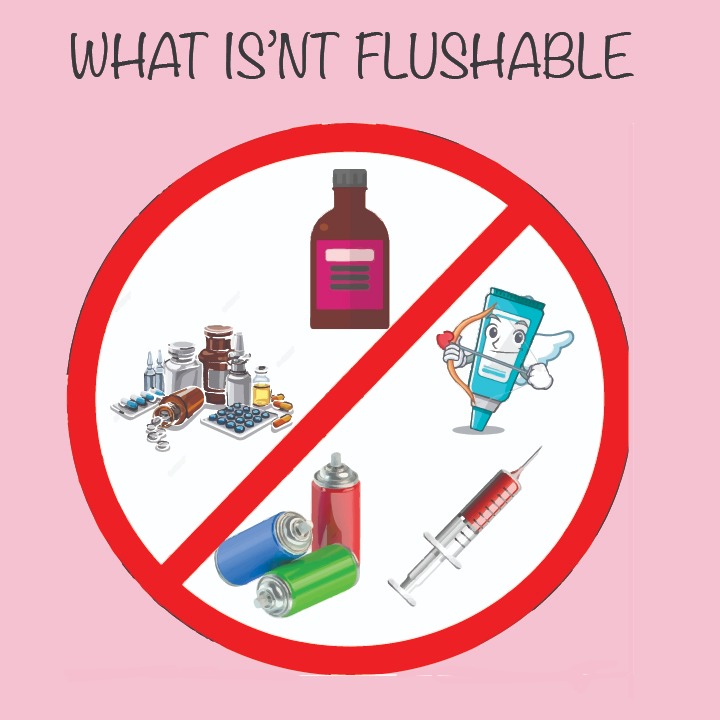
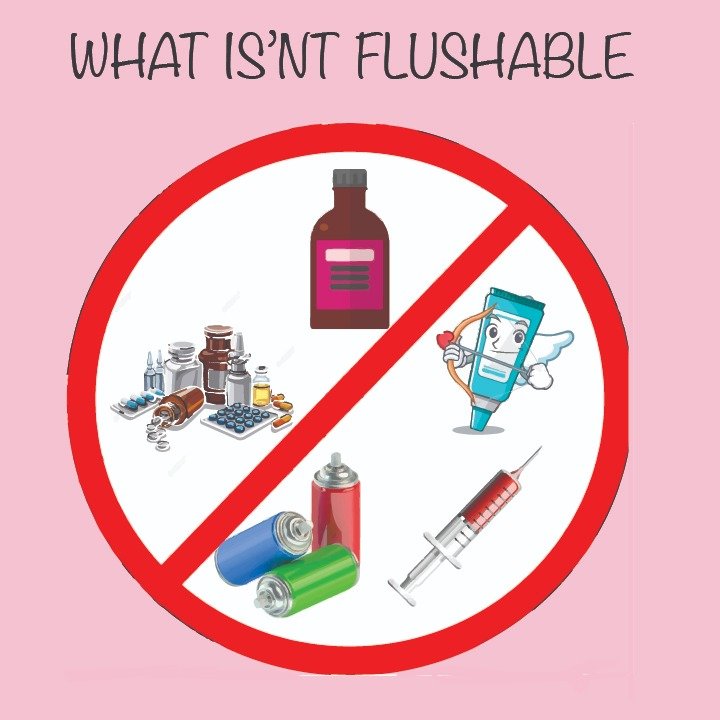
What isn’t flushable?.
Did you know that medications or toxic chemicals poured down the drain or flushed down the toilet can harm wastewater treatment facilities, pollute water supplies, and endanger wildlife? Certainly, it’s not a bad lesson to talk to kids early about what IS and ISN’T flushable (how many clogged toilets have you had thanks to random objects being flushed by curious children?). As children get older, some municipalities provide water and wastewater plant tours.
Water resusability.
Sink to toilet system.
☆In Italy,
All the intelligent architects plan in a certain way that there should be a connection between washbasin and flush
So that the water which we use for washing hands, gets purified through a purifier placed in between and can be used for flush.
A sink-to-toilet system is one that has an adjustable sink toilet top attached to the toilet’s refill cycle. The system works by filtering sink drainage after which it stores it in a reservoir, which is used to flush the toilet. Particularly, it redirects water from the pipe to a valve which then drains the water into the toilet bowl.
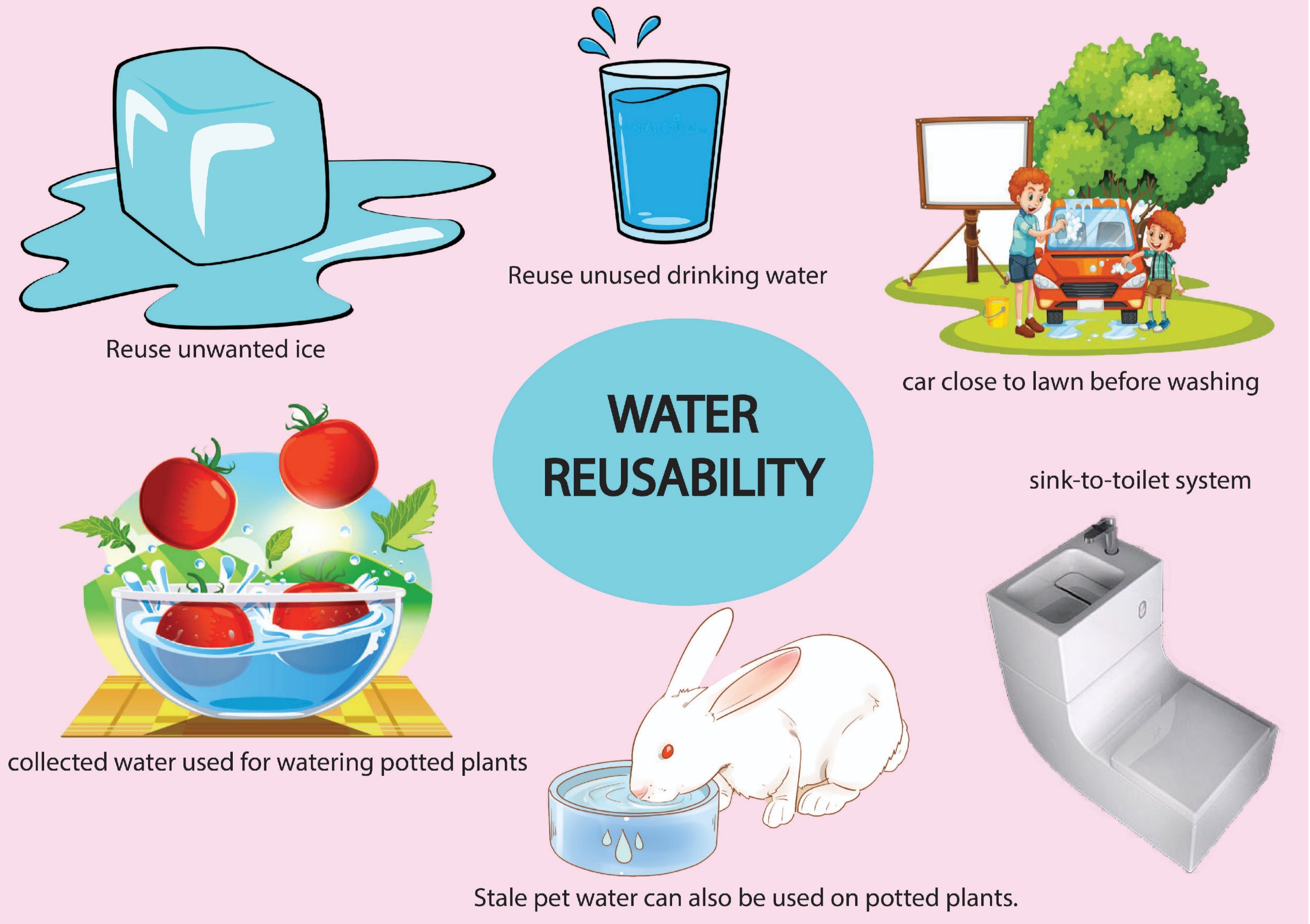
Car close to lawn before washing.
☆When washing the car, it can be done in such a way that the water drains into the lawn instead of it being directed down the drain. Soap water cannot harm the grass. So, by moving the car very close to the lawn before washing it is an impressive technique of saving the clean water that would have been used to water the grass.
Collected water used for watering plants.
☆The water used to wash fruits and veggies can be collected then used for watering potted plants and gardens. The rinse water for utensils can also be saved and used to water houseplants or for other cleaning purposes in the house such as floors, toilets and sinks.
Reuse unwanted ice cubes.
☆Instead of dumping ice from over stayed ice trays from the freezers or ice coolers in the drain, spread it on the garden grass or around plants and let the ice melt into liquid.
Reuse unused drinking water.
☆Drinking water stored for a long period of time has a stale taste, is murky, and also has a great probability of being contaminated by bacteria. Instead of disposing it by pouring it out, you can use it for washing utensils and other household chores as it is not that dirty.
Reuse stale water.
☆Stale pet water can also be used on potted plants.
We had done a smart research by dividing the topics amidst us and then made illustrations digitally for an appealing presentation.
Sir liked our idea of making a puzzle digitally. Although he gave a feedback of restricting our topics and researching them in depth. I like the way this project helps me to be connected with nature and know the fun facts about certain topics while researching.
Stay tuned to have a look at the digital puzzle for kids.
Thank you sir.

 Glorious mess💕