

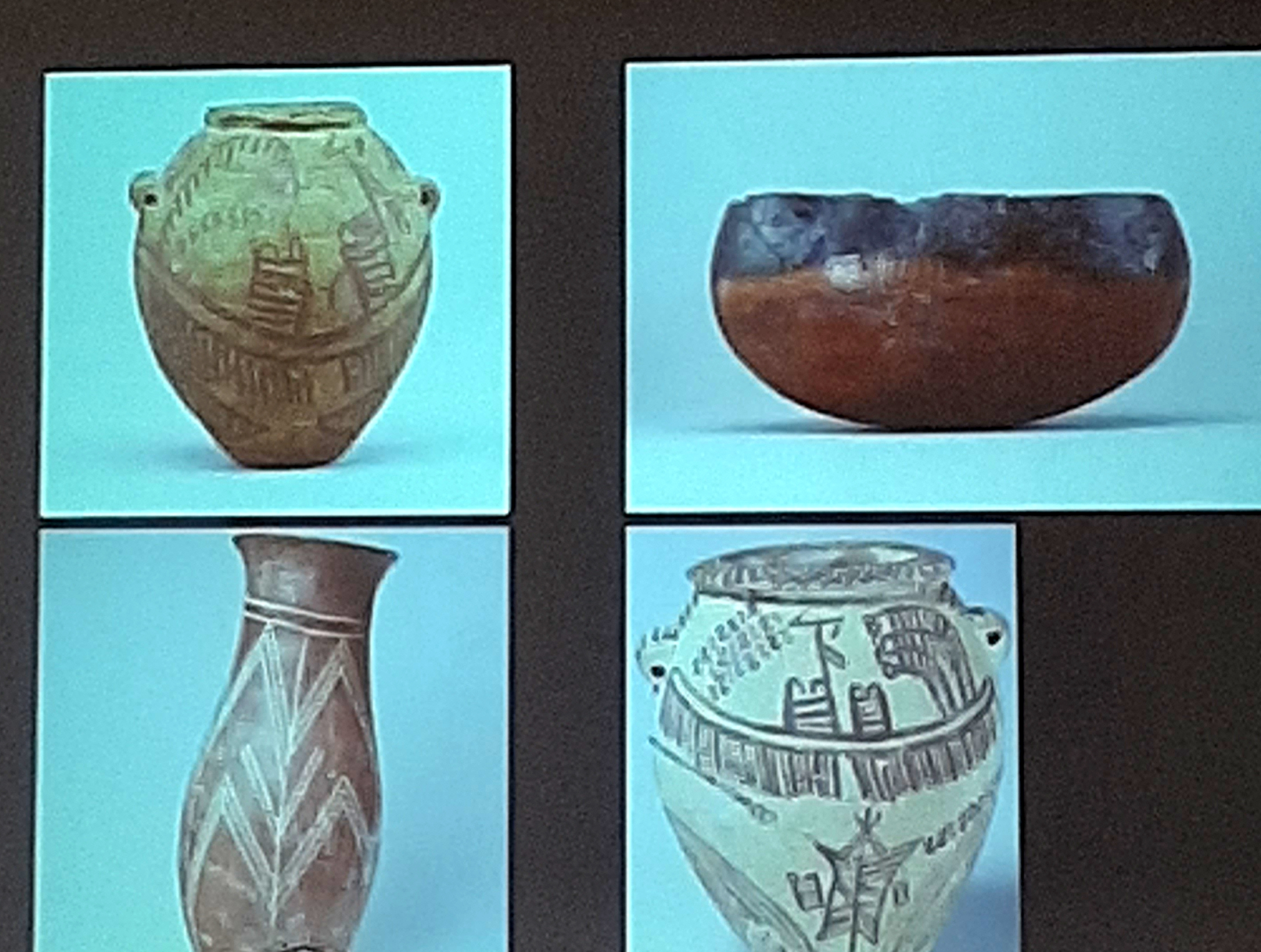
☆Things I relate to when I think of Egypt.
○Mummification
○Pharaohs
○Cotton
○Tutarkhaman
○NILE
○dieties
○Anthropomorphic – S sphinx, nature, forces, worshippers.
○Gold
○Pyramid
○Cape
○Astronomy
○Heiroglyph.
○Pyramids
○Settlement
○Hierarchy
○Power
○Unity
○Domestication of animals
Then we discussed the objects and expressed our thoughts about it.
1.Pottery
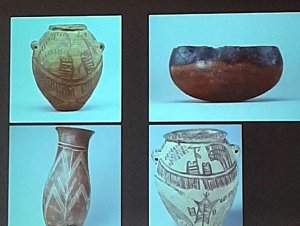
My observation.
I thought these pottery design are related to agriculture. In the 4th picture I imagined the figures to resemble street lights and birds flying over it.
Actual history behind it.
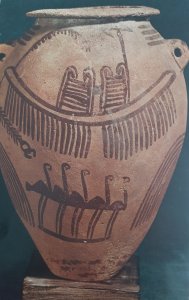
 The first picture depicts a Terra-Cotta vase. The Egyptian artistic tradition of clear, analytical description within a unified and technically demanding structure began in the Gerzean period. The colour of the terracotta itself was often favored, decorated with a red varnish. The same form of vase such as the base, the belly, the mouth, and the handles of this vase. The same forms used in such earthenware vases are found in vessels of hard stone.
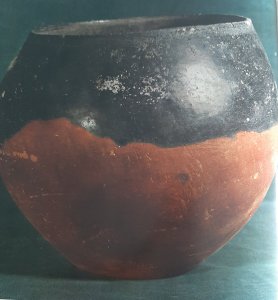
The second picture is a large vessel which is dark red ware, with black mouth and lining that lasted throughout late prehistory and continued in Nubia into historic forms. These were not turned on a wheel, so the contours of these vases are casual and irregular. The absence of a dividing line between the two colours gives this ware its instinctive and spontaneous effect.
2.Palette.
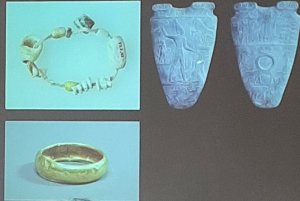
☆Narmer palette which is a makeup pallete
☆Ceramic glazed with extent that it becomes shiny.
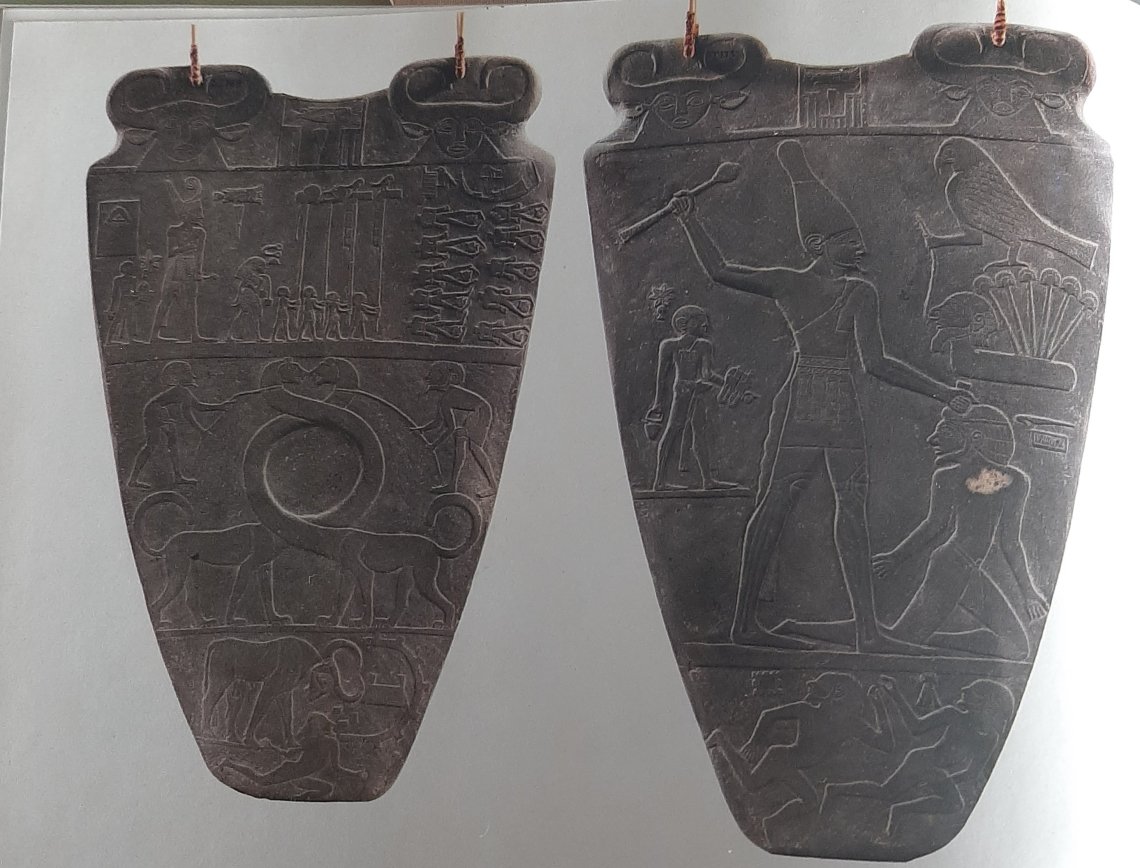
The palette records the victory of King Narmer, who wears crown of Upper Egypt and Lower Egypt.
The face of palette (left) has a hollow for grinding antimony, shows two heifers’ heads representing the goddess Hathor- between which appears the name of the king.
The narrative on the reverse of the palette (right) is conveyed in a gesture that sums up an entire event. In the group formed by king who is about to strike a blow. And the fallen enemy, there is an exact rendering of the event and at the same time a symbol of the vanquished.
This statue is a good example of the artistic tendencies of the time. The aura of Saite art is still strong, as the perfection of the impersonal face shows. It is constructed according to the familiar scheme that consisted of eyebrows arched above the nose, horizontally placed eyes, compressed lips with two deep dimples at corners, a round chin, and a full throat. The bent arm stresses the simplicity of the composition.
I could relate these statues to the ones taught earlier. History is all interconnected. Once you start relating and connecting things, you are on your way. According to me the purpose of learning all these objects is maybe to relate and compare how things used to be and how they are at present conditions. This helps us to look at things around us with a wider perspective. Maybe this is the objective of this class. Whatever it is, history is my favorite.

 Glorious mess💕